
The quick read
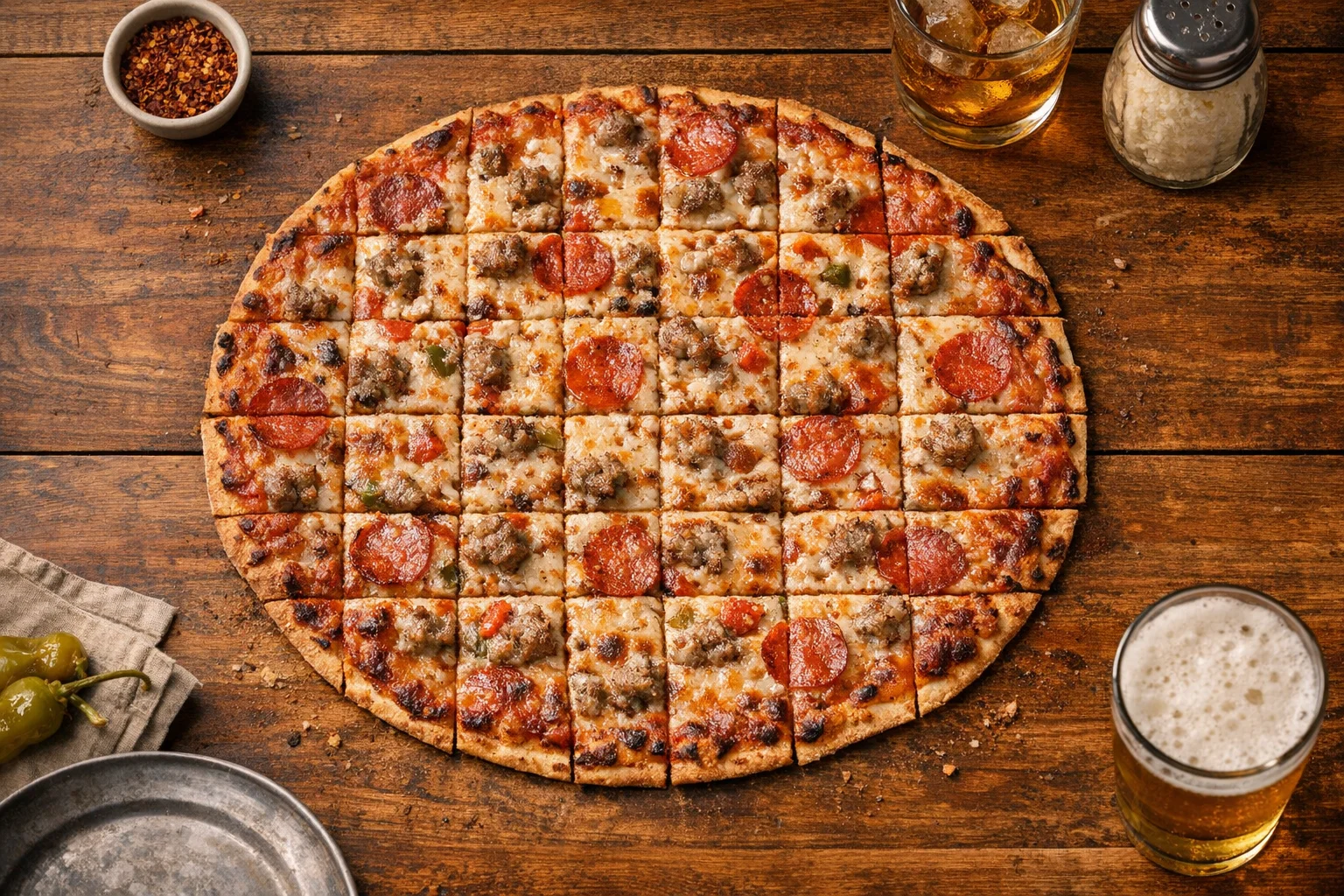
Most pizza menus give you triangle slices from a round pie. Tavern style gives you something different: a thin, crisp round pizza cut edge-to-edge into small squares, built for sharing at a table.
The shape of a tavern-style pizza
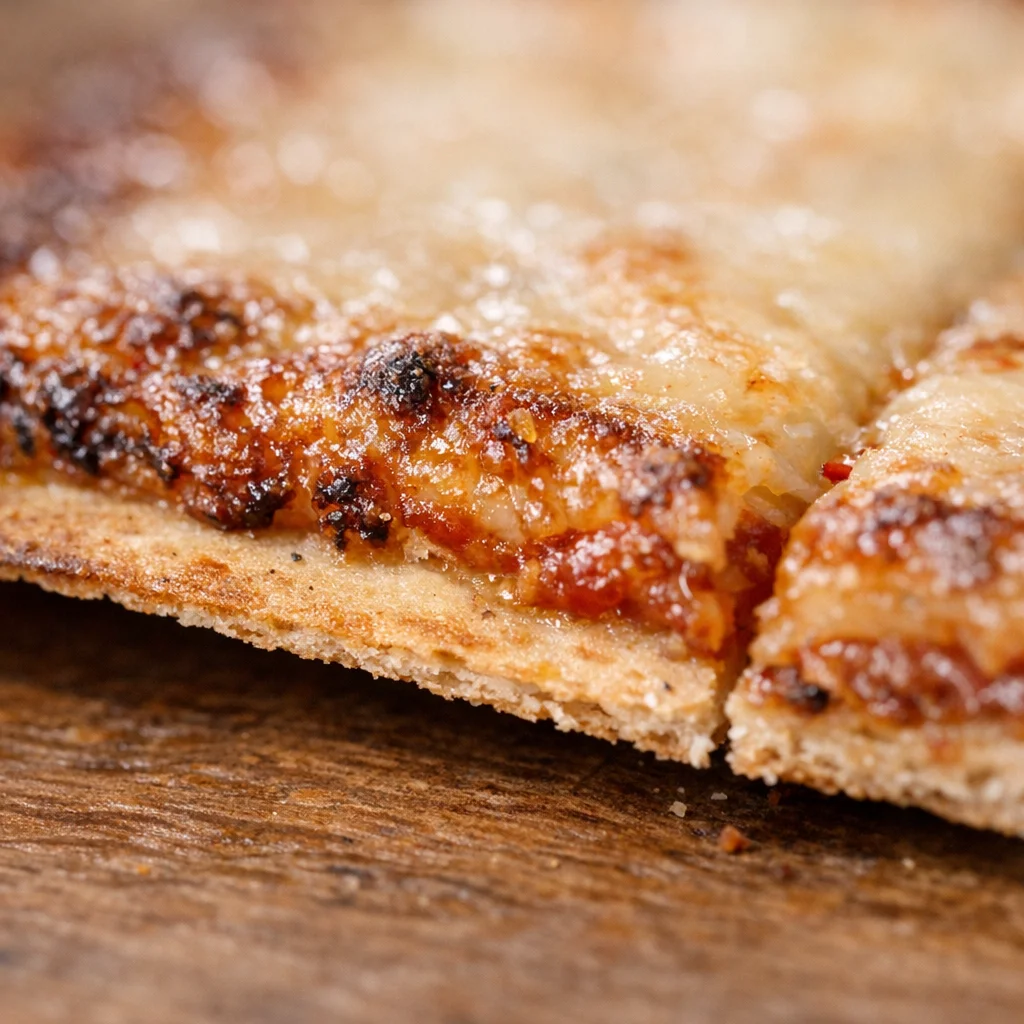
Tavern style is one of the most format-specific pizzas in the United States. The pizza is round, not rectangular. The crust is thin and crisp, closer to a cracker than to a chewy New York-style slice. The center stays flat under the topping load.
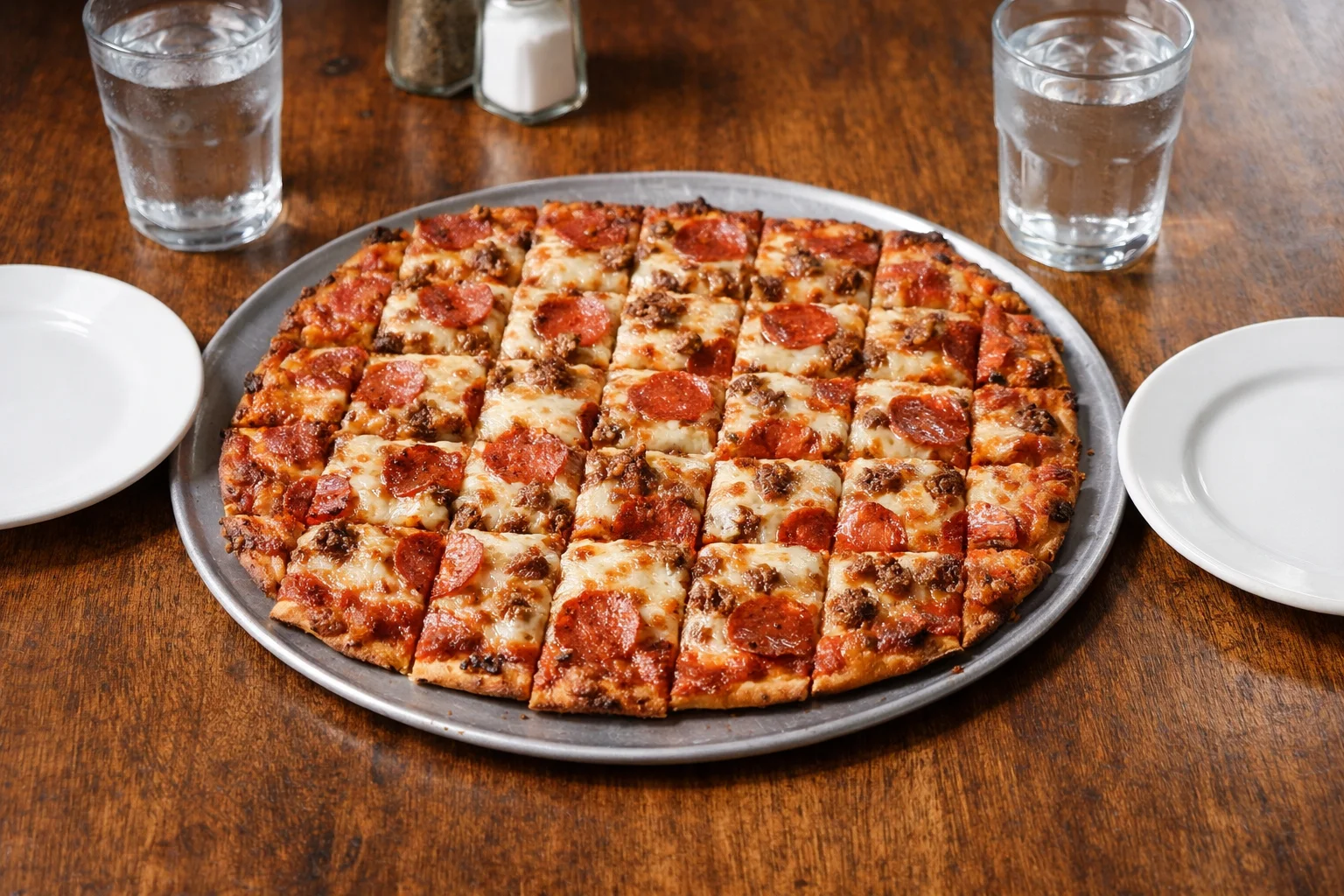
The cut is edge-to-edge squares, often called party cut or tavern cut. The slices are smaller than Neapolitan or New York slices because the grid is dense. They are built for sharing, not for folding.
What you do not usually find on a tavern-style pie is a heavy puffy rim, a soft folding center, or the expectation that one slice is a meal. The bar-table format is the giveaway: a whole round pie cut into many small squares, dropped on a table for two to four people.
Where the style is from, in plain terms
Tavern style is a Chicago neighborhood pizza. It is the everyday pizza in much of the city, the one ordered on a weeknight when the goal is not a deep-dish destination meal.
The style's center is Chicagoland and the wider tavern belt: parts of Illinois, eastern Iowa, northwestern Indiana, and pieces of Missouri and Wisconsin. Within Chicago, tavern style is daily pizza; deep dish is the more famous export.
The format fits a bar naturally. A small whole pizza cut into many pieces works on a high-top table next to drinks, and a cracker-thin crust can bake quickly in a deck oven.
How tavern style compares with other Chicago pizzas
Chicago has more than one famous pizza idiom. Tavern style is thin, round, square-cut, and shared casually. Deep dish is tall, pan-baked, wedge-cut, and usually eaten as a sit-down meal.
The differences matter because they help a reader order the right thing. Tavern style is the weeknight bar-table pie. Deep dish is the heavier destination format.
Chicago thin is often used as a near-synonym for tavern style. Some shops draw fine distinctions, but for a reader scanning a menu, Chicago thin usually points to the same family: round, thin, crisp, and square-cut.
For the contrast with a softer puffy-rim format, see Neapolitan Pizza: What to Look For; the format and rim are the clearest tell.
| Style | Shape / pan | Cut | Crust cue | Reader signal |
|---|---|---|---|---|
| Tavern | Round, not a rectangular pan | Edge-to-edge small squares (party cut) | Thin and crisp, close to a cracker | Shared whole pie at a casual table |
| Deep dish | Tall round pan | Wedges | Tall pan-baked crust with a buttery base | Heavier sit-down format |
| Neapolitan | Small personal round pie | Wedges or informal cuts | Soft airy rim with a tender center | Eaten fresh, not party-cut |
| New York style | Large round pie or slice | Wedges | Foldable, structured through the middle | Slice-counter or large shared pie |
| Detroit | Rectangular pan | Squares | Thick airy pan crust with a crisp cheese edge | Pan-style; squares alone do not make it tavern |
| Bar pie | Small round pie | Usually wedges | Thin casual pie | Casual setting alone is not tavern style |
Common mistakes
The first mistake is calling tavern style Chicago deep dish. They share a city, not a style. Many Chicago-area pizza nights are thin and square-cut, not deep and wedge-cut.
The second mistake is calling every casual thin pizza a bar pie. Bar pies can be small, thin, and served in a casual setting, but the cut and regional idiom are different.
The third mistake is assuming every square-cut pizza is tavern style. If the pan is rectangular, start by thinking Sicilian, grandma, Detroit, or another pan idiom.
The last mistake is treating one small square like a full slice. Tavern style works best as a shared whole pie.
Final takeaway
Tavern style is the everyday pizza of a specific American region, named for the setting where it often appears. The clearest tell is the cut: a round pie chopped into small squares, served whole on a casual table.
Once you know that signal, you can pick the right format for the right night: sharing at a bar, not chasing a hand-held slice. When you are ready to find one in the wild, browse the Illinois pizza listings for places whose own menus support tavern-style tags.
When you are ready to read a city page that follows the same source-backed standard, see How a City Page Becomes Useful.
Editorial note
This explainer is general editorial guidance about an American pizza style. Individual restaurant claims still need their own source support and live on each place's listing.
FAQ
Is tavern style the same as deep dish?
No. Tavern style is thin, round, crisp, and square-cut. Deep dish is pan-baked, much taller, and usually cut into wedges.
Is every square-cut pizza tavern style?
No. Tavern style is usually a round thin pizza cut into squares. Rectangular pan pizzas can also be cut into squares, but they belong to a different style family.